

I’ve been writing weekly newsletters for almost a decade now, and have been on Substack with my former newsletter for a good chunk of that. Here are the tools I’ve picked up along the way.
Notes
I jot down a lot of ideas in my Notes app, but also on paper in small notebooks I can keep in my pocket together with my trusted 10+ year companion pen, the LAMY pico. When I’m feeling particularly stuck, I take out a notebook and start penning down ideas until I find something I like.
Figma
If you’ve seen the Calm & Fluffy front page, you will have seen the many doodles that accompany the articles. I use Figma to draw these. I’ve also used Figma to design the logo, special assets, and social media posts, though I no longer use it for the latter.
Canva
When posts go up, I usually also prepare some assets for Instagram, where I’m also building an audience. That audience needs a different engagement strategy, though, so I usually turn posts into a few slides with key takeaways, rather than posting screenshots of blocks of text.
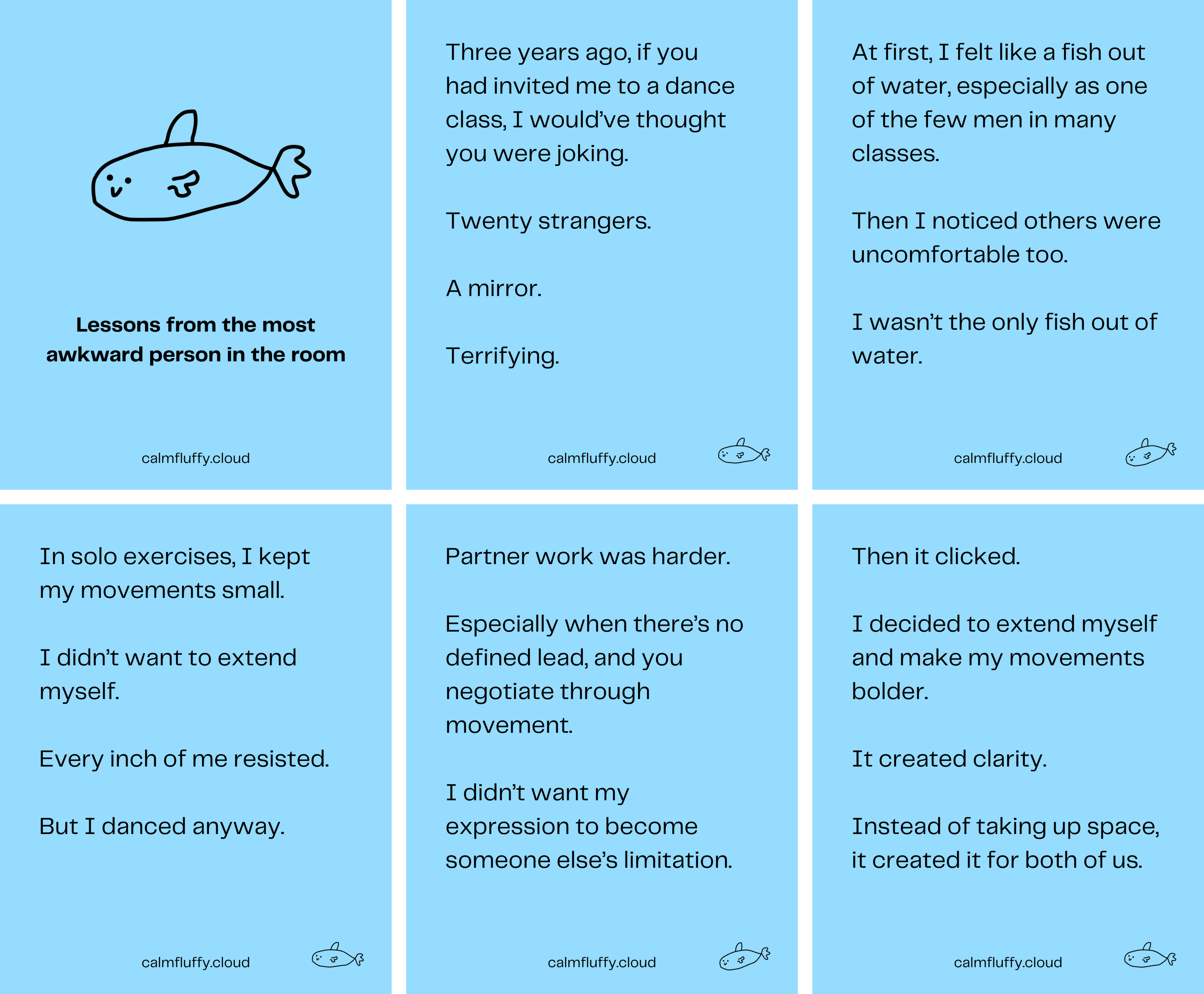
Check out Calm & Fluffy on Instagram.
Grammarly
I started a trial earlier this year to see if it had improved at all in recent years. It’s alright. Unfortunately, I forgot to cancel the trial, and it renewed for a year. It does occasionally offer some good suggestions, and at minimum makes sure any punctuation oversights are caught without the watchful second pair of eyes from an editor.
Notion
I never intended for Calm & Fluffy to be as centred on my voice as it is now, so soon I’ll finally be adding interviews to the regular mix of newsletter posts. To keep track of my outreach and all the details, I built a small CRM in Notion.
I was already paying for it anyway (I use it in conjunction with Super, to power my personal homepage). Otherwise, I’d likely use Trello or a simple Google spreadsheet.
Google Docs
For larger writing projects and interviews, I usually use Google Docs. I’m often fine typing directly into Substack’s editor, as it’s quite minimalist, but for bigger projects, I find Google Docs more helpful, as it allows me to jot down thoughts in comments, mark things, etc.
Google Calendar
I keep a little Google Calendar with a schedule for upcoming posts and interviews.
Namecheap
To manage my domains, including the calmfluffy.cloud, which is where the Substack currently sits, I use Namecheap. It’s fast and easy to use. Never had any issues with it.
ChatGPT
Firstly, I’m very selective in how I use ChatGPT as its output can be really iffy or misleading. However, it can be useful as a second set of eyes. For some of my writing, when I’m done, I’ll ask for a critique. It may bring up a concept I introduce but don’t close the loop on, or let me know when an argument I’m making is weak. It can be useful input, but the suggestions it makes are often very poor, so I ignore those.
In the past, I also used it for social media captions, but no matter how much I tweaked, it would keep coming up with the corniest copy, so in the end, I had to ask: is the time saved worth the lower quality in how I present my hard work? I decided it wasn’t. Especially after I realised the Instagram audience needed its own strategy completely.
I also think there’s a lot to say for digital craftsmanship that doesn’t lean on cultural synthesis, which I’ll be writing about more later this month.
That’s it. I don’t use any extra analytics tools beyond what Substack offers natively, because the type of optimisation it unlocks simply doesn’t matter at this stage of building a publication.
Curious to hear about your processes. Drop a note in the comments.
જ⁀➴ for your curiosity જ⁀➴
Sustainable & fair fashion campaigner Venetia La Manna dropped an ‘anti-excess gift guide’ for the holiday season, with ideas ranging from self-made, to gifting experiences, things to make clothes last longer, and lots more. 🌱
One of the first blogs I wrote for was Techdirt, which offers a critical, but often hopeful view of technology. Its founder, Mike Masnick, was recently involved in creating a manifesto to inspire Silicon Valley to have a more positive impact on the world. Read the Resonant Computing manifesto here (and sign it, if you like).
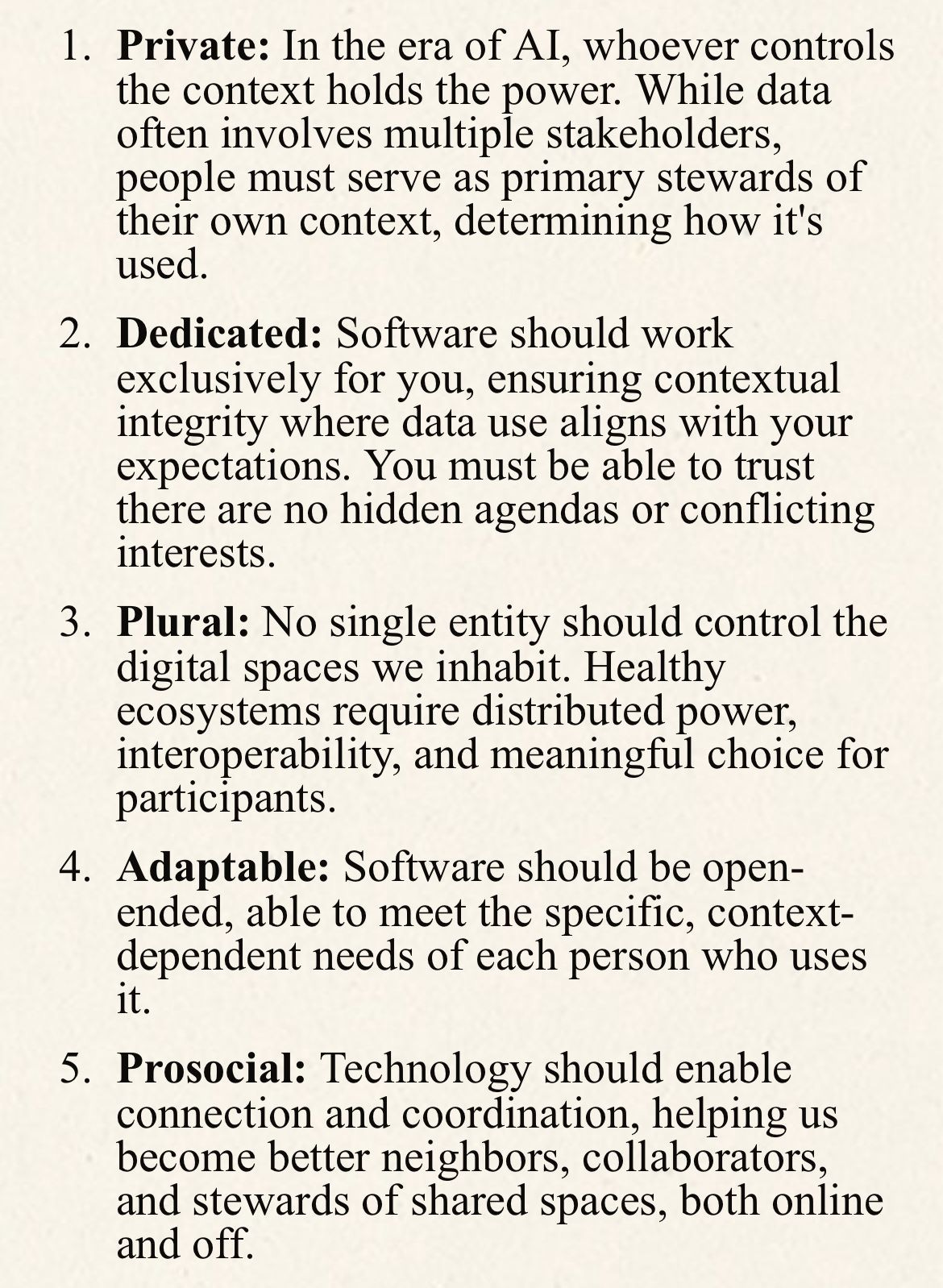
An excerpt from the Resonant Computing manifesto.
ᕱᕱ For your ears ᕱᕱ
I love the darkness of the shorter days we’re currently experiencing in Berlin, but I’m also a big fan of how infinite summer can feel on a good day, where you’re totally in the moment, and the sun takes many hours to set. That, in part, comes from a sense of nostalgia, because that presence seems to come naturally to young people. Or at least, it did to me.
A song that captures that feeling well, including the nostalgia, is Torus’ Summer of Love, which features a 00s dance-inspired, dreamy aesthetic and includes the famous ‘right here, right now’ sample from Fatboy Slim’s dance banger of the same name.